The NYC housing pipeline
In housing, you'll get hit with lots of numbers: Filings, permits, completions. Each of these tell you something, but they don't give you a good understanding of what's happening on the ground. You want to know which projects are live and how they are progressing.
To help you understand this, we are releasing: The Housing Pipeline
One chart showing you all projects in flight over the the last decade. With the ability to filter as your heart desires. And so beautiful and informative that even the NYC comptroller reposts it!
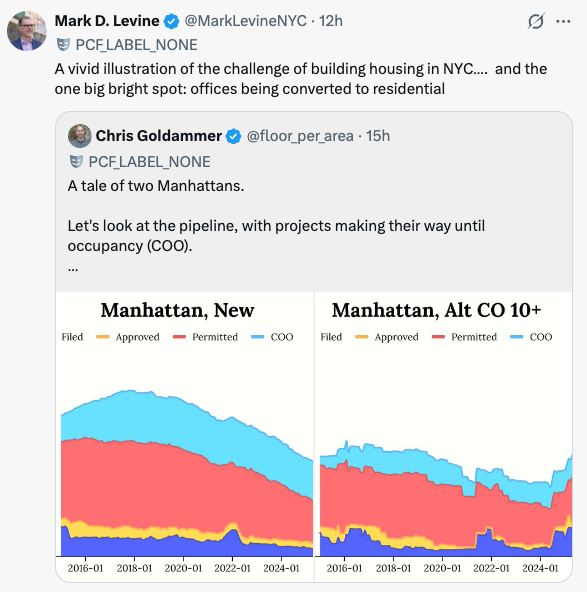
Live, for free, at: citytracker.ai/pipeline
Office-to-Resi
You might have heard that we're undergoing a boom in office-to-resi conversions, especially in Manhattan. The comptroller again gives us the data:
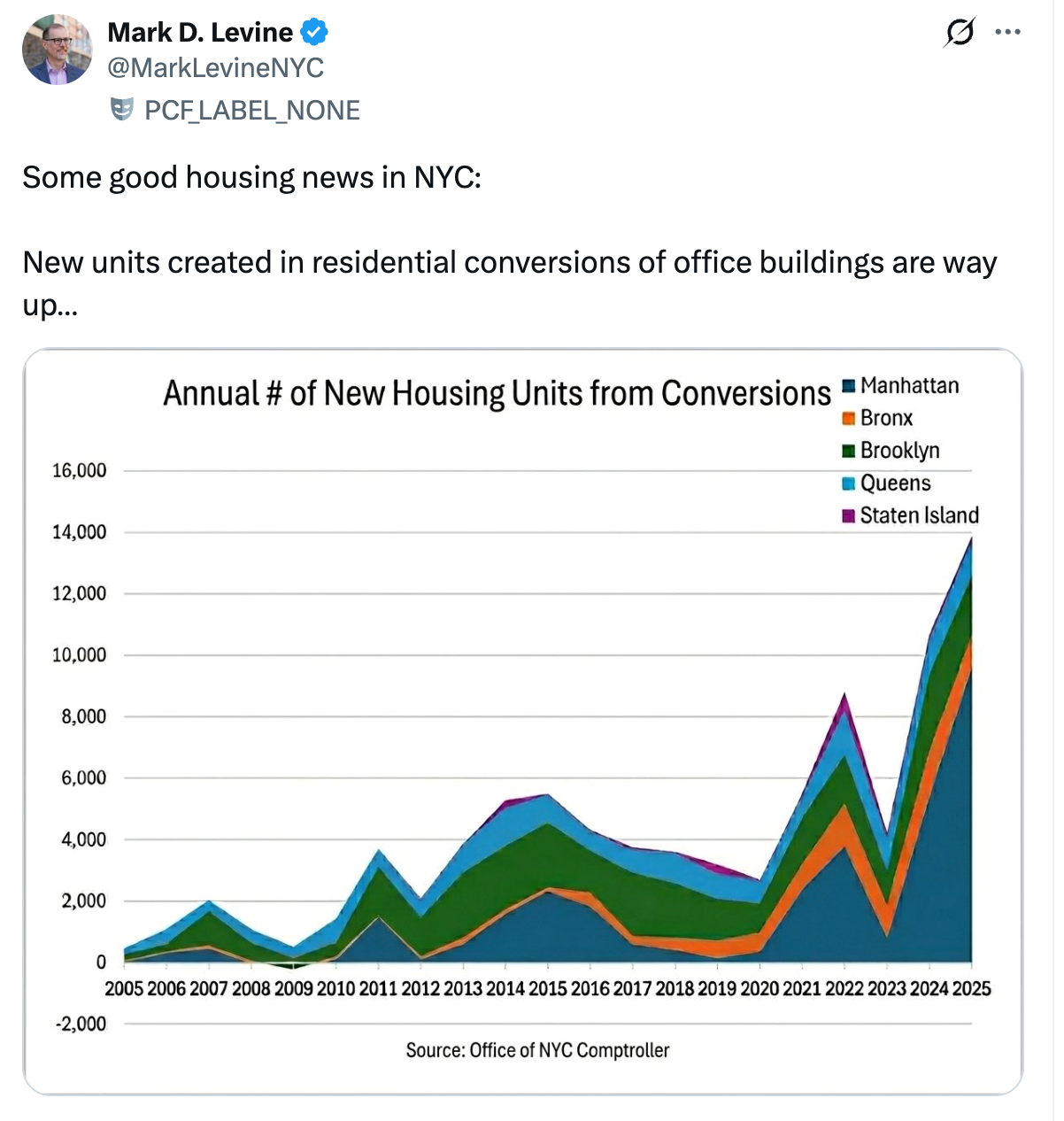
How do we know? We can look at filings for new conversions. Let's zoom in on Manhattan:
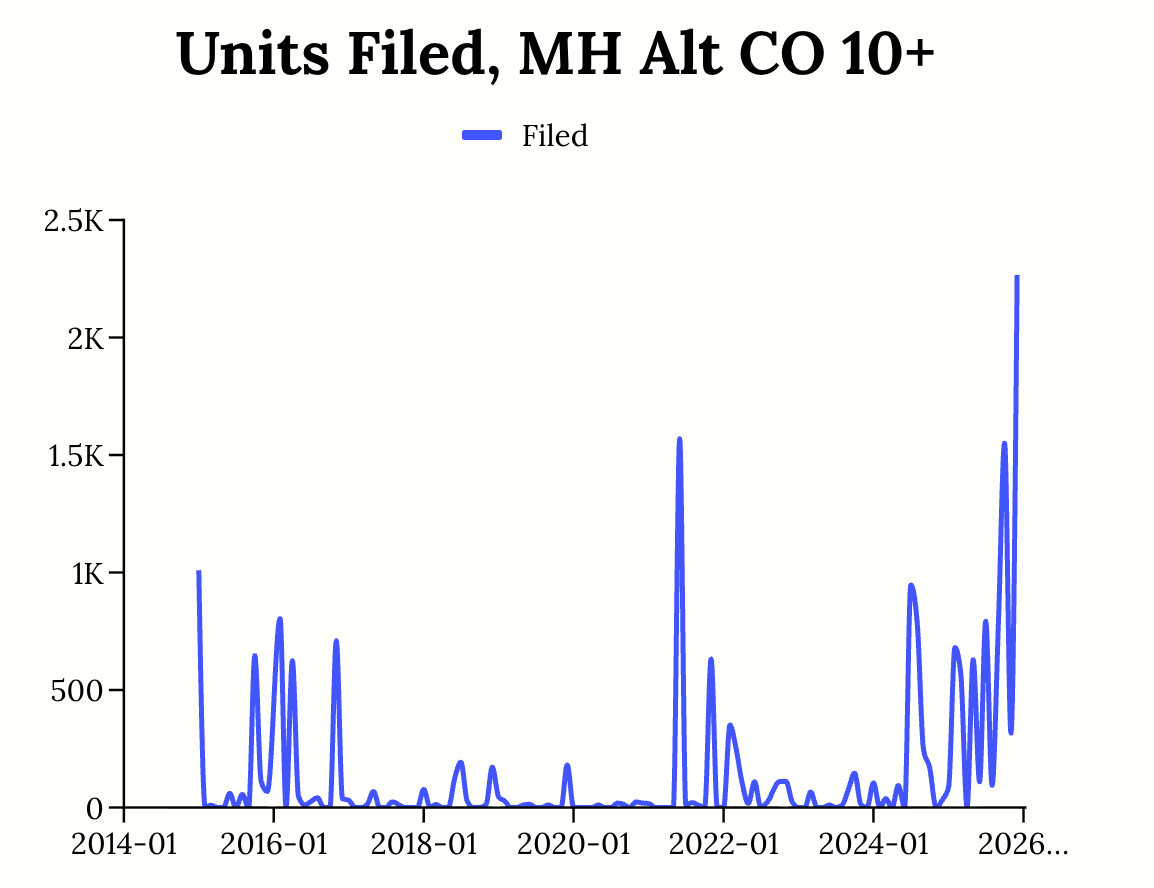
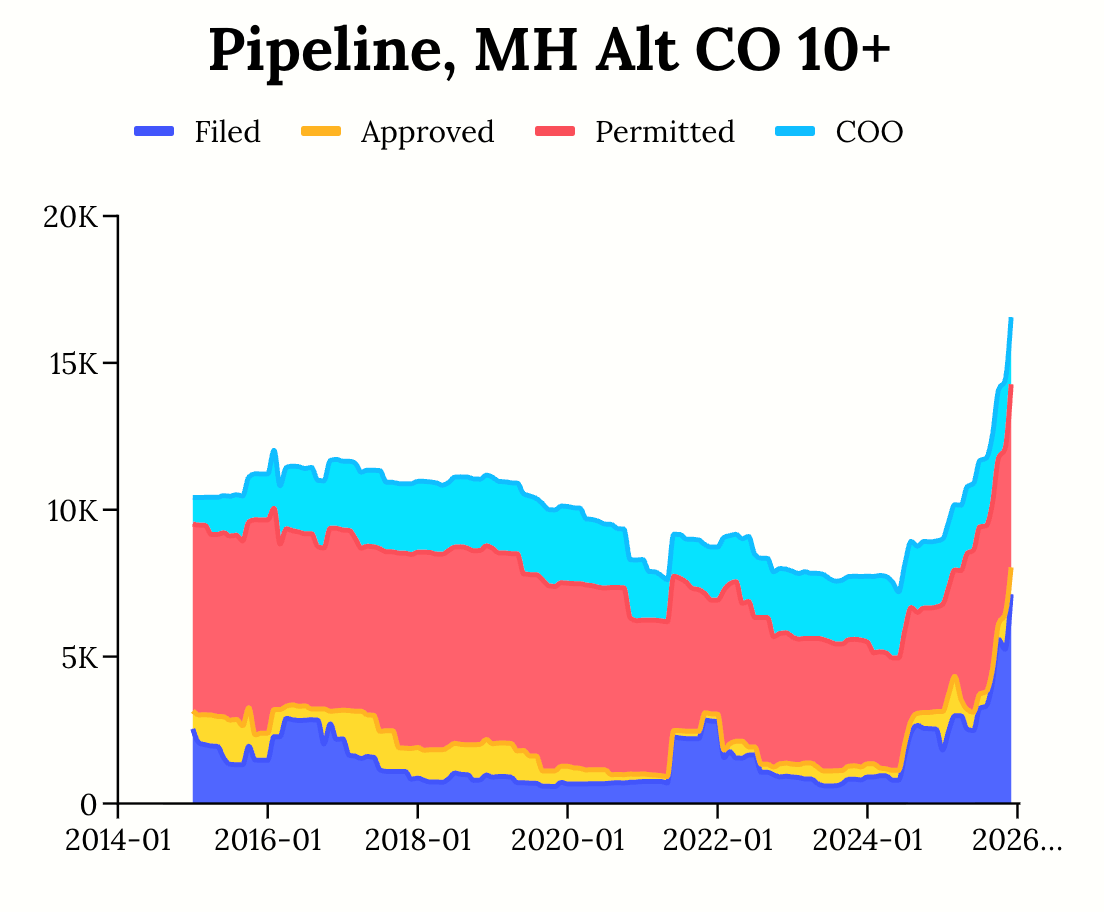
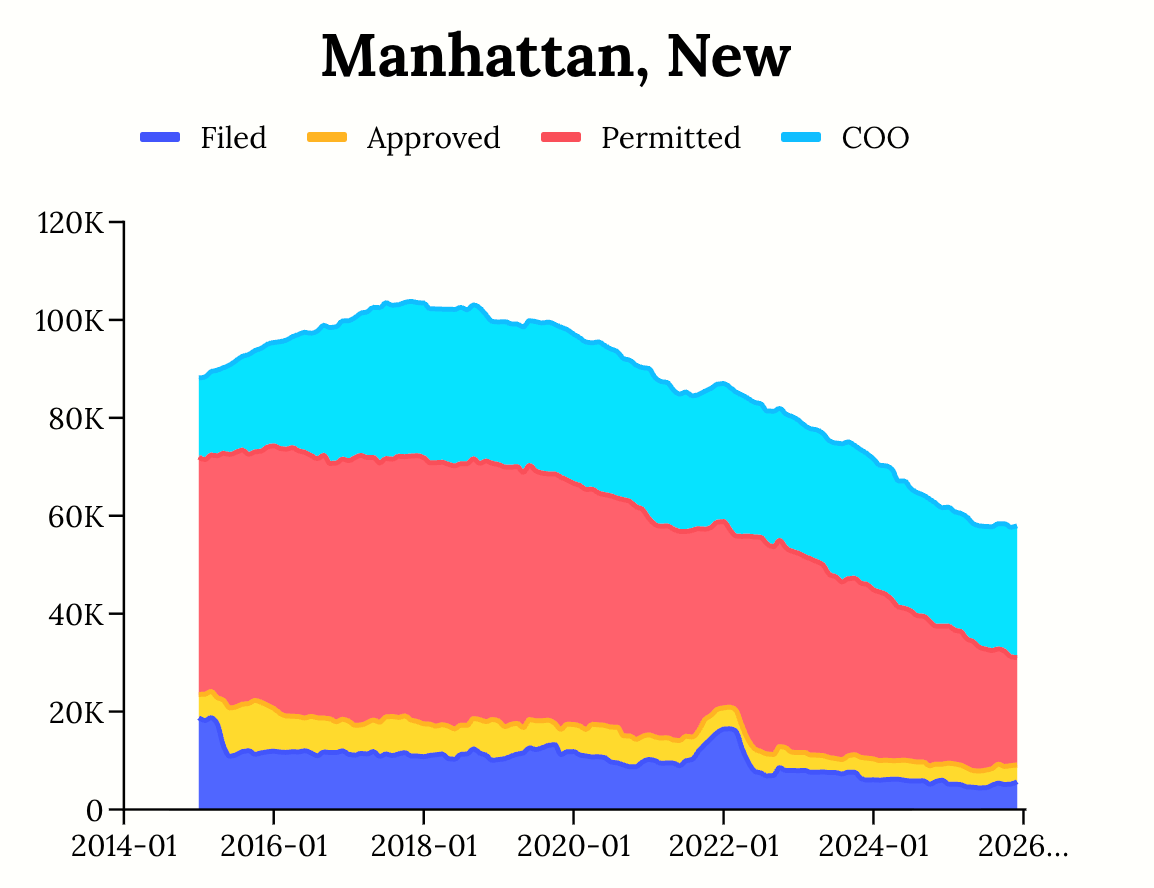
But this doesn't tell you what's happening on the ground. Are all these quick projects? Or do they take many years? Do they even get permitted? So let's switch to the pipeline:
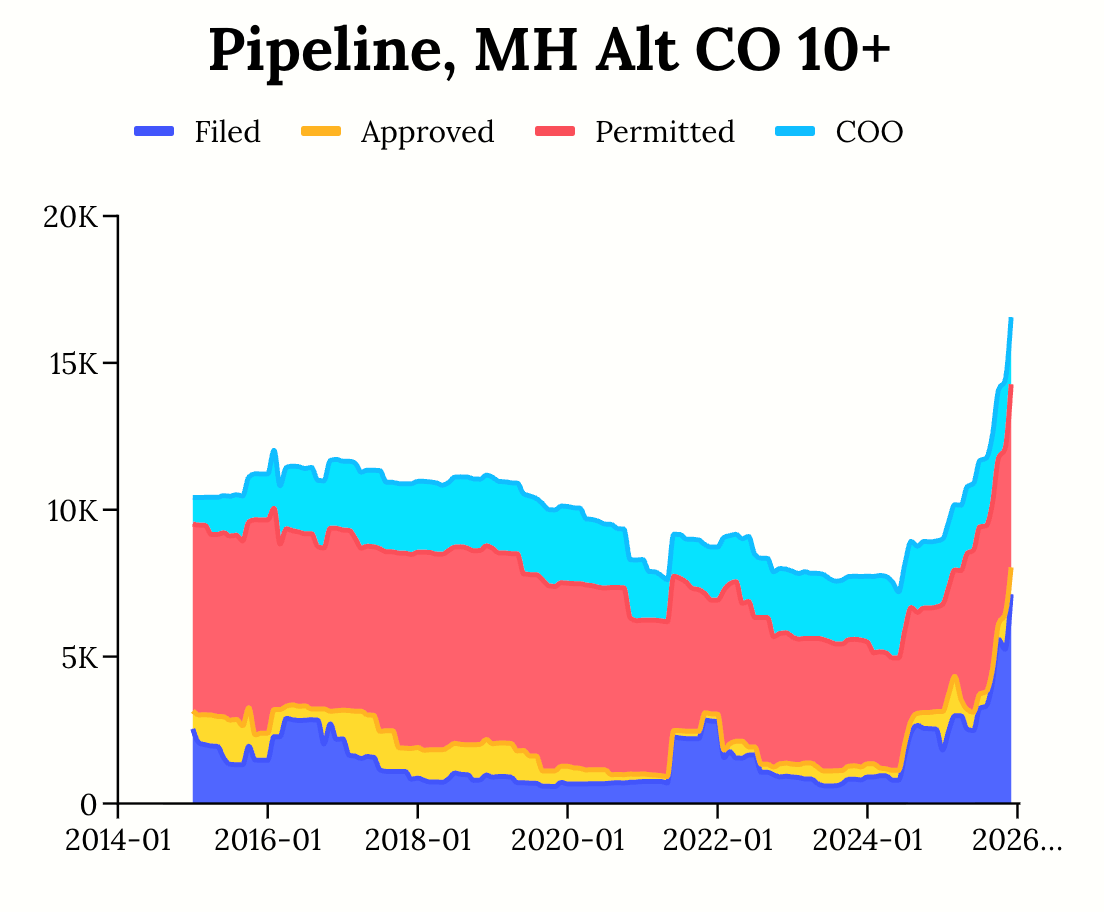
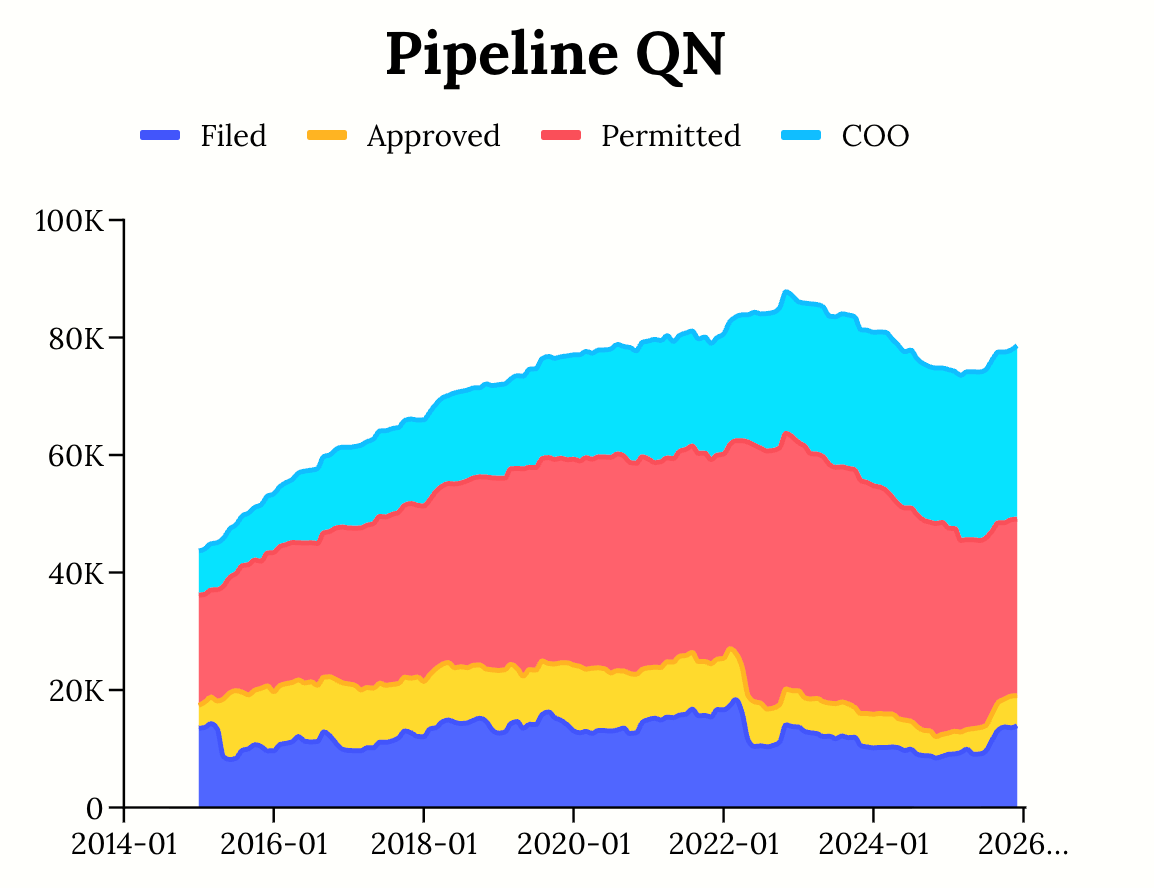
Now we're seeing everything in flight, and we can see how the 2025 filings lead to a spike in the pipeline, especially driven by filed (not yet permitted) projects. Over time, we expect more of these to get permitted, and then completed, and become COO.
And while it's easy to celebrate this as good news, we must highlight that this goes hand-in-hand with a drop in the pipeline for new construction.
More applications
Manhattan vs other boroughs
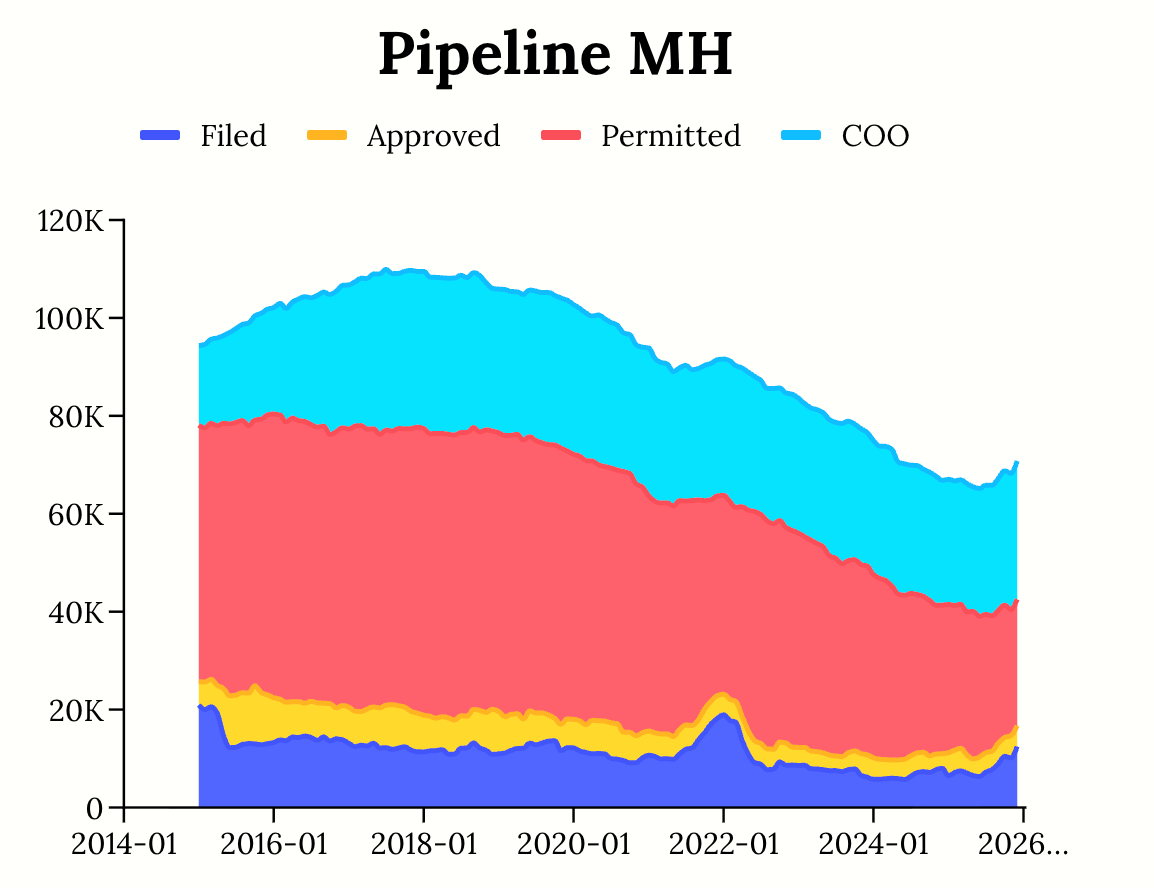
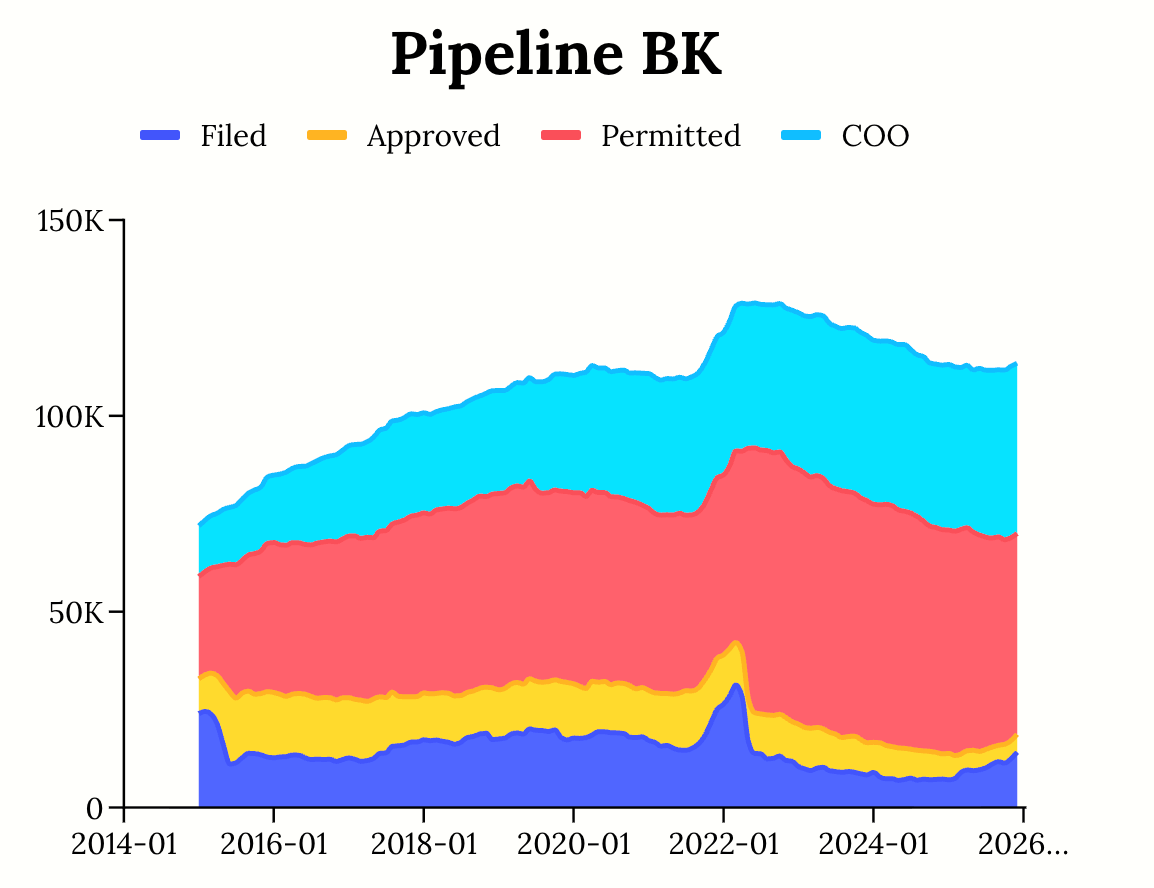
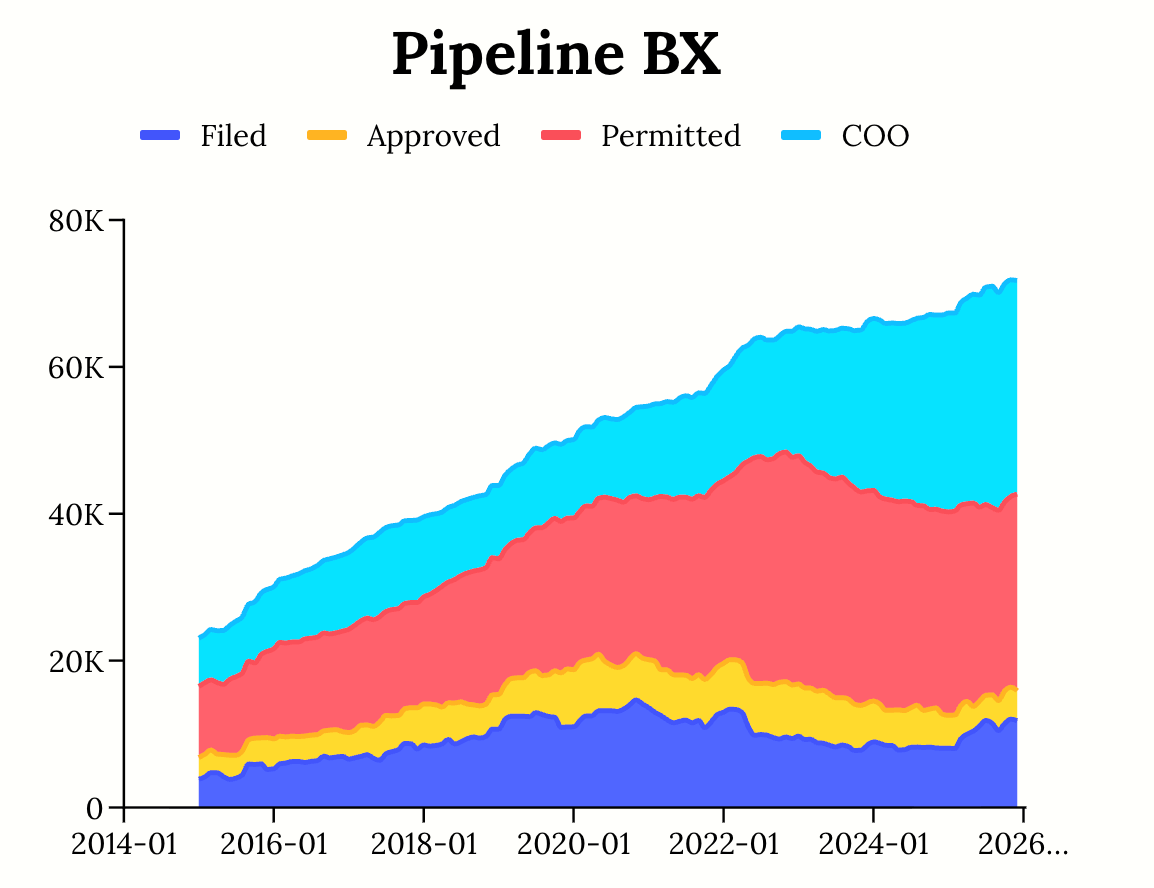
We're seeing a clear story: While Manhattan has declined, we're seeing high and consistent volume in Brooklyn and Queens, and more recently a sharp uptick in the Bronx.
Permit spike in 2022
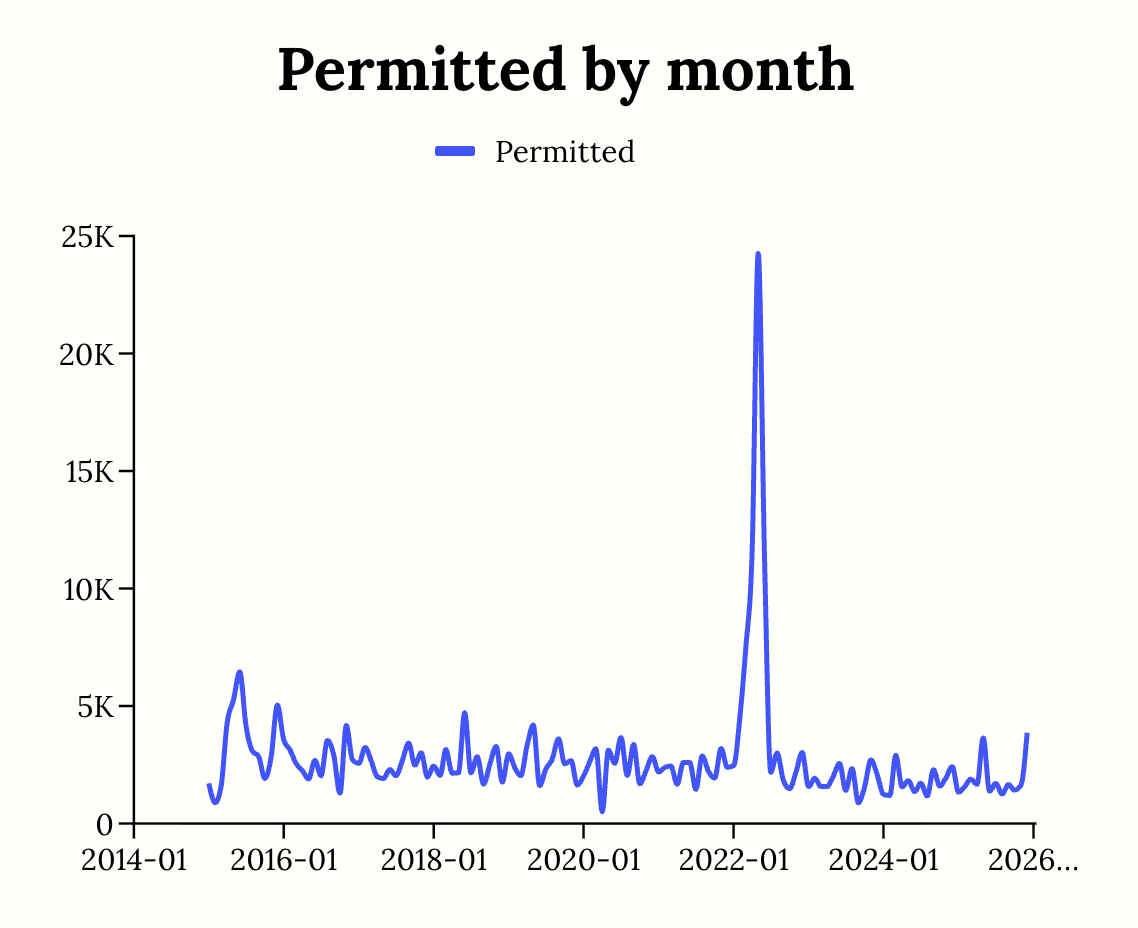
In NYC, new development is highly dependent on tax breaks. And it turns out that the 421a tax break expired in 2022. Did this affect permit filings?
The answer is: An overwhelming yes! 2022 showed an unparalleled spike, especially in permits.
Features
Filters
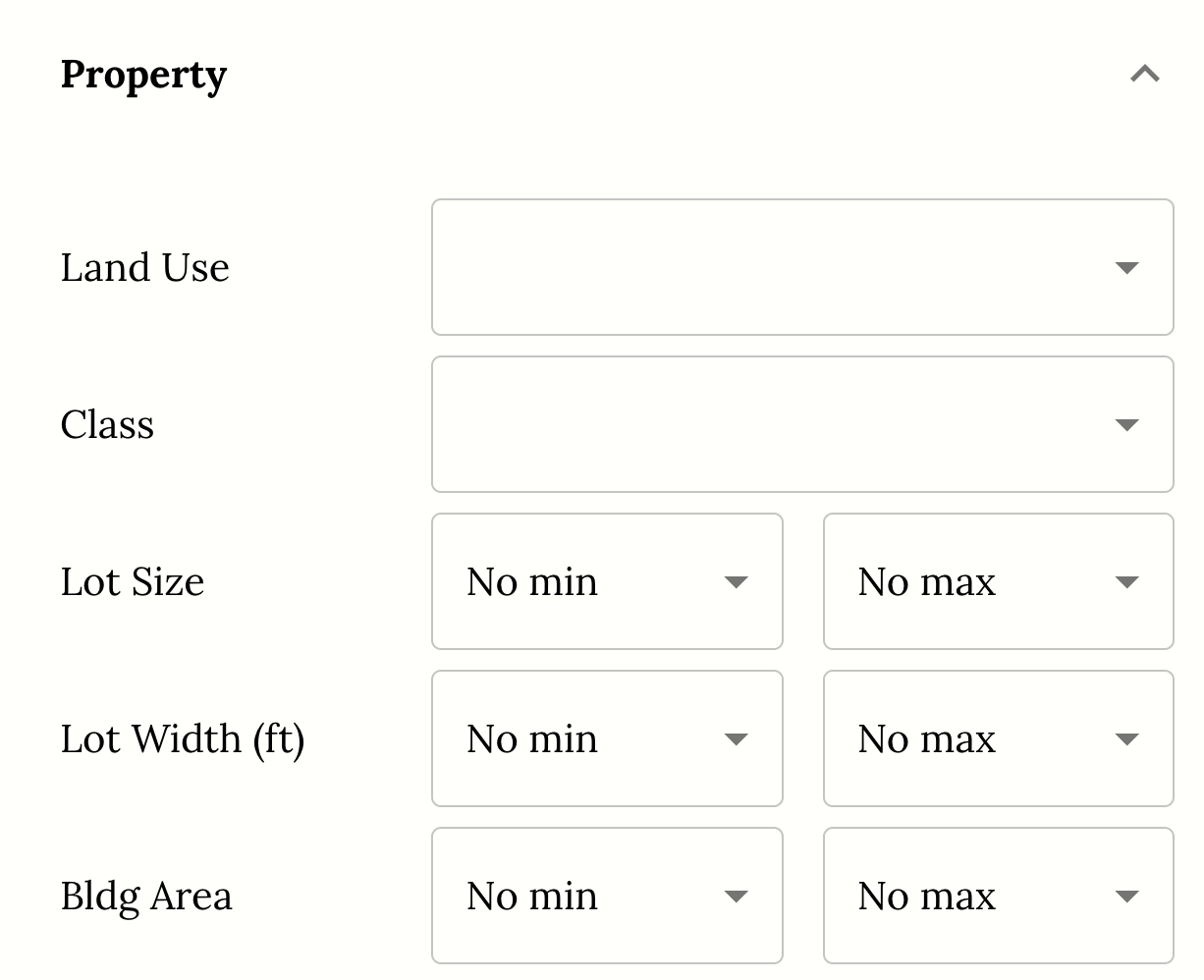
This is not just one pipeline for the city. You can use the wide range of filters we have to find the pipeline that matches your question.
How does it work?
To create this pipeline, we reviewed a wide range of city documents, and then reproduced the key logic of the DOB housing database, in a way that allows us to track each filing over time.
The key inputs are DOB filings from both NOW and legacy systems, permits, and certificates of occupancy.
In theory, this is easy: We just need to observe status changes and put them in order. In practice, it's a hairy exercise.